
Our Research
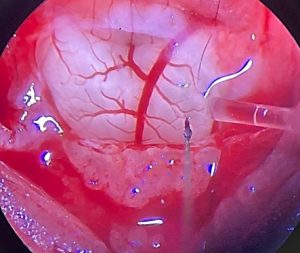
Our lab investigates how the brainstem sustains life. We study the neural networks that integrate sensory signals from the body – airflow, blood gases, blood pressure, and respiratory effort – and convert them into the precisely coordinated motor output required for breathing and cardiovascular stability. While these circuits operate continuously and reliably under normal conditions, how they function as networks, and how they fail during disease or drug exposure, remains largely unknown.
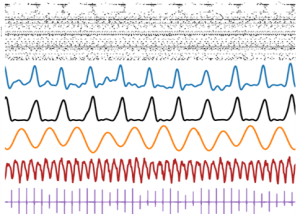
Using advanced neurophysiological approaches, including high-density neuronal recordings, optogenetics, and integrative in vivo physiological measurements, we investigate how brainstem circuits encode and integrate multimodal sensory information to regulate breathing, airway tone, and cardiovascular function. Rather than focusing on single neurons in isolation, our work emphasizes network-level organization, revealing how distributed neural populations dynamically coordinate homeostatic control.
A major focus of the lab is understanding how opioids perturb these networks, how they reshape sensory processing, alter neural excitability, and decouple neural signals from effective physiological output. By combining whole-animal experimental models with single-cell and circuit-level analyses, we aim to identify the neural and molecular mechanisms that underlie opioid-induced respiratory failure, as well as the adaptive processes that may enable recovery.
Ultimately, our goal is twofold:
- To uncover fundamental principles governing how the brainstem maintains physiological homeostasis, and
- To translate these discoveries into novel therapeutic strategies that preserve respiratory function while enabling safe and effective pain management.